Tree Removal Kingston TAS
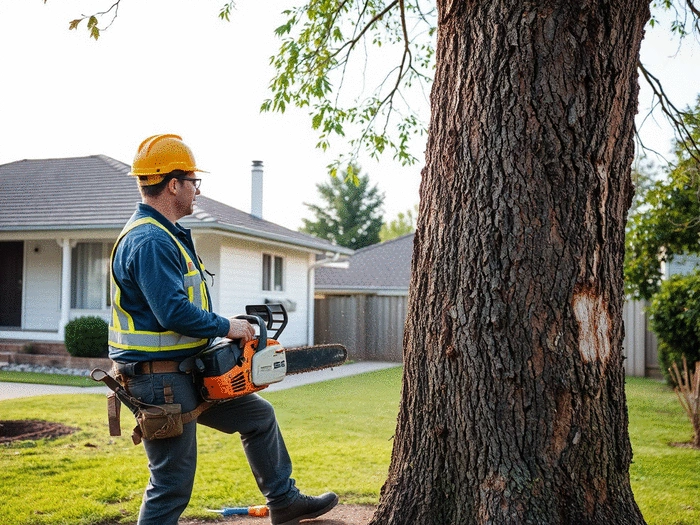
Tree removal in Kingston can require careful planning, particularly where trees are positioned close to homes, fences, gardens, driveways or other structures. Assessing the condition of the tree and the space around it helps determine whether removal, pruning or another form of tree management is appropriate.
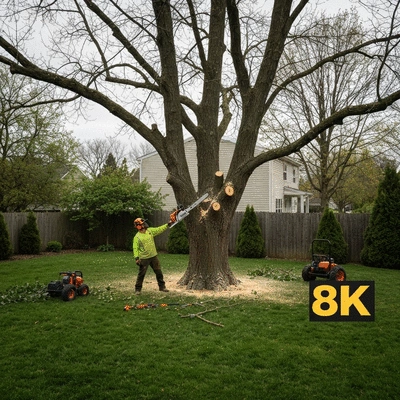
Tree Removal in Kingston TAS
Professional tree removal involves more than cutting down a tree. The condition of the trunk and branches, surrounding structures, available access and the direction in which sections can be safely removed all need to be considered.
For properties in Kingston, restricted working space can make some tree removal jobs more complex. Trees growing close to houses, fences, driveways or established gardens may need to be removed in sections rather than brought down in one piece.
When Tree Removal May Be Necessary in Kingston
- Dead or declining trees: Significant decay or deadwood can increase the risk of falling branches or structural failure.
- Storm-damaged trees: Broken limbs, split branches or damaged trunks may require urgent attention after severe weather.
- Unstable trees: A noticeable lean or structural weakness can create a hazard depending on the tree's position.
- Trees near structures: Trees and large branches growing close to buildings, fences, driveways or other structures require careful assessment.
- Overgrown trees: Where a tree has become unsuitable for its available space, pruning or removal may be considered.
Tree Lopping and Tree Pruning in Kingston
Tree removal is not always necessary. In suitable situations, tree pruning can address dead, damaged or problematic branches while allowing the tree to remain in place.
Tree lopping and pruning should take the structure and condition of the tree into account. Removing large branches without considering how the remaining canopy and limbs are balanced can create further problems, so the work should be planned around the individual tree and its location.
Access and Property Considerations
Access is an important consideration when carrying out tree work around residential properties. Limited space between buildings, fences and gardens can affect the equipment that can be used and how branches and sections of trunk are lowered.
Where machinery cannot reach the tree directly, removal may involve cutting and lowering sections individually. This approach can help control where branches and timber land and reduce the risk of damage to surrounding areas.
Storm Damage and Hazardous Trees
Storms can leave trees with broken branches, damaged limbs or compromised structural areas. Some damage may not be obvious from ground level, particularly where branches have split or sections of the canopy have become unstable.
If a tree has been damaged during severe weather, keep clear of hazardous branches and arrange an assessment before attempting major clean-up work. Depending on the damage, pruning, sectional removal or complete tree removal may be appropriate.
Stump Grinding in Kingston
After a tree has been removed, the remaining stump can continue to occupy valuable space in a garden, lawn or access area. Stump grinding reduces the stump below ground level and can make the area easier to landscape or reuse.
The size and position of the stump, along with access to the property, can influence the equipment and method required. Removing the remaining stump can also help prepare the area for future landscaping or other work.
Land Clearing in Kingston
Land clearing may be required when vegetation and trees need to be removed from a defined area before landscaping, construction or other property work. The scope of clearing depends on what needs to be removed and how the site will be used afterwards.
Access, existing structures, fences, retained vegetation and the intended use of the cleared area should all be considered before work begins. Stump grinding can also be incorporated where existing stumps need to be removed from the work area.
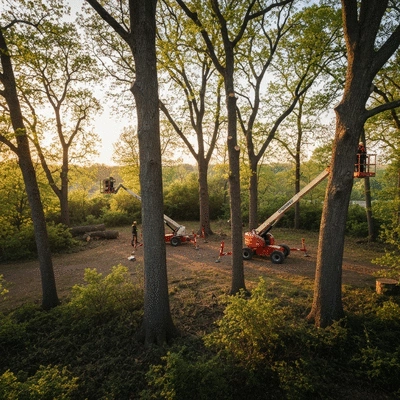
Assessing Tree Health Before Removal
A tree health assessment can help identify problems that may affect the removal process. Signs of decay, disease, deadwood, damaged limbs or structural weakness can change how the tree needs to be handled.
The tree's position is also important. Proximity to buildings, power infrastructure, neighbouring property and other obstacles can affect the safest removal method.
Preparing for Tree Removal
Before tree work begins, remove vehicles, garden furniture and other movable items from around the work area where possible. Clear access paths can make it easier to move equipment and remove branches and timber.
If the tree is close to a boundary or shared access area, consider how the work may affect neighbouring properties. Identifying these issues beforehand can help avoid unnecessary disruption during the removal.
Frequently Asked Questions About Tree Removal in Kingston
- Q1: What does professional tree removal involve?
- A1: Tree removal generally begins with an assessment of the tree, its condition and surrounding area. The removal method is then planned around access, nearby structures and the safest way to lower and remove branches and sections of trunk.
- Q2: Can pruning be used instead of tree removal?
- A2: In some situations, yes. Tree pruning may be suitable when the tree can safely remain and the problem can be addressed by removing selected branches or managing the canopy.
- Q3: Why is tree health assessment important?
- A3: An assessment can identify decay, disease, deadwood and structural weaknesses that may affect both the safety and method of tree removal.
- Q4: What if access to the tree is difficult?
- A4: Restricted access can change the removal method. Where machinery cannot reach the tree, branches and trunk sections may need to be removed progressively and lowered in a controlled manner.
- Q5: Is stump grinding available after tree removal?
- A5: Stump grinding can be used to reduce the remaining stump below ground level, making the area easier to landscape or reuse.
Tree Removal Kingston
Whether you require tree removal, tree lopping, tree pruning, stump grinding or land clearing, each property presents different access and safety considerations. Assessing the tree and surrounding area before work begins helps determine the appropriate approach.
Contact us on 0419 136 537.